Strength
Why Women Over 40 Should Prioritize Strength Training
October 8, 2026
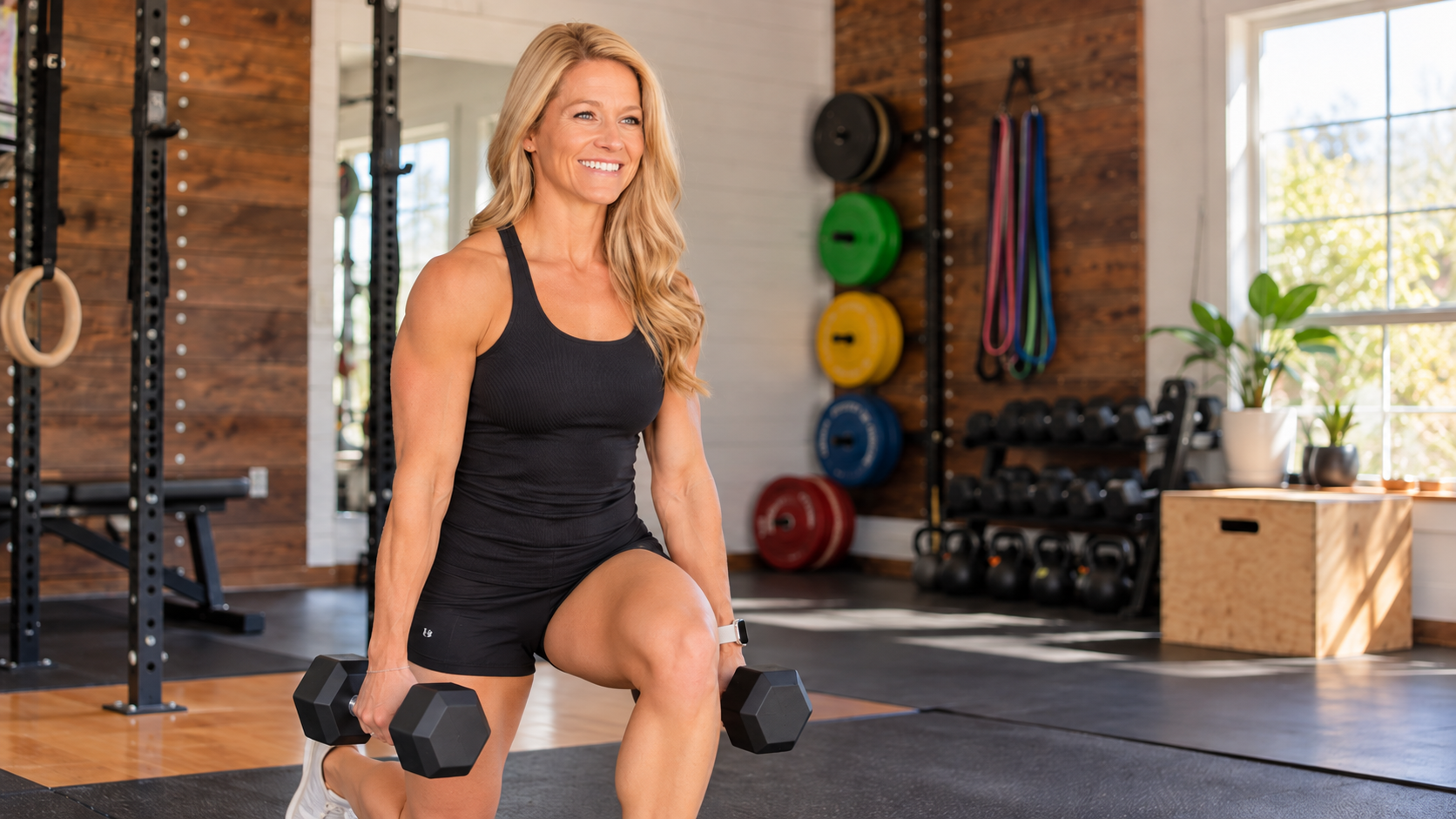
There are a lot of things women are told to focus on as they get older.
Eat less.
Do more cardio.
Try to “tone up.”
Avoid getting bulky.
But if I could get women over 40 to prioritize one thing in their training, it would be this:
Build and maintain muscle.
Not because everyone needs to become a powerlifter.
Not because you have to chase a certain look.
Because muscle matters for how you move, how you feel, how you perform, and how capable you stay as you get older.
And strength training is one of the best ways to protect it.
Muscle becomes more important with age
As we get older, maintaining muscle becomes something we need to be more intentional about.
That does not mean you suddenly start falling apart at 40.
It just means the habits that support strength and muscle become more important over time.
Muscle helps support:
- strength
- balance
- bone health
- metabolism
- joint support
- body composition
- physical independence
- performance
- everyday function
It is one of those things you may not appreciate until you start losing it.
That is why I would rather see women start building strength now than wait until they feel like they have to.
Strength training is not just about aesthetics
A lot of women first come to strength training because they want to change their body composition.
That is completely okay.
Building muscle can absolutely help create the stronger, more defined look many women are after.
But the benefits go far beyond appearance.
Being strong makes real life easier.
Carrying groceries.
Lifting luggage.
Moving furniture.
Picking things up off the floor.
Climbing stairs.
Traveling.
Playing with your kids or grandkids.
Doing the activities you enjoy without feeling fragile or limited.
That is what I care about when I talk about long-term strength.
“Toning” really means building muscle
The word “toning” gets used constantly in fitness.
But physiologically, what most women mean when they say they want to look more toned is usually:
build some muscle and reduce enough body fat for that muscle to show.
That is why endless light weights and hundreds of reps are not necessarily the answer.
Your muscles need enough challenge to adapt.
That usually means gradually increasing resistance, improving technique, and progressing your training over time.
You do not have to lift the heaviest weight in the gym.
But you do need to give your body a reason to get stronger.
You are not going to accidentally get bulky
This is still one of the biggest concerns I hear from women.
And I understand why.
For years, women were told to stay away from heavy weights and stick to cardio if they wanted to look lean.
But building significant amounts of muscle takes time, training, food, recovery, and consistency.
It does not happen by accident.
For most women, strength training leads to looking stronger, firmer, more athletic, and more capable — not suddenly becoming huge.
Strength training can support body composition
This is another reason I prioritize it.
If fat loss is the goal, I do not want women to simply lose weight.
I want to preserve as much muscle as possible while reducing body fat.
Because those are not the same thing.
Two people can weigh the exact same amount and have completely different body compositions.
That is why the scale is only one piece of the picture.
Strength training gives your body a reason to hold onto muscle while your nutrition supports the rest of the goal.
Cardio still matters
I am absolutely not anti-cardio.
I run.
I coach runners.
I care a lot about cardiovascular fitness.
Your heart matters too.
But I do not think women need to choose between strength and cardio.
The better question is how to combine them in a way that supports your goals.
For many women, that might mean:
- strength training 2–4 days per week
- regular walking
- some intentional cardiovascular work
- running or conditioning if you enjoy it
The exact mix depends on you.
You do not have to train six days a week
This is another place women get overwhelmed.
They assume that if strength training is important, they suddenly need to live at the gym.
You do not.
A well-designed two- or three-day-per-week program can be incredibly effective.
Especially if you are consistent.
The quality of the training matters more than simply piling on more sessions.
I would rather have you strength train two or three days every week for a year than train six days a week for three weeks and burn out.
Recovery matters too
Strength happens when your body has time and resources to adapt to training.
That means:
Eat enough.
Get enough protein.
Sleep.
Give hard muscle groups time to recover.
Do not turn every workout into a punishment.
More is not always better.
Sometimes the next step in getting stronger is actually recovering better.
Start where you are
You do not have to already be “fit” to start strength training.
And you do not have to know every exercise in the gym.
A good program should meet you where you are.
That might mean dumbbells at home.
Machines at the gym.
Barbells.
Bodyweight exercises.
A combination of everything.
The equipment matters less than having a plan that progresses over time.
What I want women over 40 to understand
You are not training just for this summer.
You are training for the next several decades.
Build muscle.
Protect your strength.
Take care of your cardiovascular health.
Fuel your body well.
And create habits you can continue long enough for them to matter.
The goal is not simply to look fit.
The goal is to stay capable.