Nutrition
Why Diets Fail — And What Actually Works
August 26, 2026
If you’ve ever started a diet feeling really motivated, followed it closely for a few weeks, and then somehow ended up right back where you started, you are not alone.
And most of the time, it is not because you “failed.”
A lot of diets fail because the plan itself is too restrictive, too aggressive, too complicated, or simply not realistic enough to fit into everyday life.
You can follow almost anything for a short period of time.
The better question is:
Can you still do it when work gets busy, your kids have practices, you travel, you go out to dinner, or life just gets messy?
That’s the part that matters.
The all-or-nothing cycle
A lot of diets are built around rules.
Don’t eat this. Cut out that. Stay under this number. No sugar. No carbs. No eating after a certain time.
At first, that kind of structure can feel helpful because it gives you a clear set of rules to follow.
But it can also create a very black-and-white mindset.
You’re either “on” the plan or you’re “off.”
And once you feel like you’ve messed up, it becomes really easy for one meal to turn into one day, then one weekend, and eventually into, “I’ll start again Monday.”
That doesn’t mean you lack discipline.
It usually means the plan left no room for being a normal human.
A good nutrition plan should be able to handle real life.
Eating less is not always better
When fat loss is the goal, it makes sense that people immediately think they need to eat less.
But there’s a big difference between creating a reasonable calorie deficit and just trying to eat as little as possible.
The goal is not to see how little food you can get away with eating.
It’s to give your body enough to support your training, recovery, energy, daily life, and overall health while still creating the right environment for fat loss.
If you are strength training, running, doing conditioning, or just living a very active life, your nutrition needs to support that.
Under-fueling may make the scale move initially, but it can also leave you feeling tired, hungry, flat in your workouts, slower to recover, and more likely to overeat later.
That is not a great long-term strategy.
Restriction doesn’t actually teach you how to eat
Another issue with a lot of diets is that they tell you what not to eat without ever teaching you how to make better decisions.
Avoid carbs. Skip breakfast. Don’t eat processed foods. Stay away from restaurants.
Okay… but then what?
What happens when the diet ends?
If you never learned how to build a balanced meal, how much protein you need, how to fuel before or after training, or how to handle weekends, travel, or dinner out, then you are right back where you started.
That is one of the biggest things I care about in coaching.
I want you to understand what you are doing and why.
The goal is not to keep you dependent on a plan forever.
The goal is for you to become more confident making those decisions on your own.
So what actually works?
Usually, the answer is not very exciting.
It is the basics, done consistently.
Prioritize protein
Protein matters for muscle, recovery, satiety, performance, and body composition.
For a lot of women, simply becoming more intentional about getting enough protein can make a big difference.
It helps support the muscle you are working hard to build and maintain, especially if fat loss is one of your goals.
Eat enough food
This is a big one.
You should not constantly feel depleted, starving, or like you are dragging yourself through the day.
Good nutrition should support your training and your life.
That does not mean there is never a place for a calorie deficit.
There absolutely can be.
But it should be reasonable enough that you can still train well, recover, think clearly, and function like a normal person.
Keep carbohydrates in your diet
Carbs are not the enemy.
They are especially important if you are active.
Carbohydrates support training, recovery, performance, and energy.
If you are lifting, running, doing intervals, or training hard in any capacity, cutting carbs just because a diet told you to is usually not the move.
The bigger picture matters far more than whether you ate rice or bread.
Strength train
If body composition is one of your goals, strength training matters.
Weight loss and fat loss are not exactly the same thing.
I would much rather see a woman lose fat while maintaining or building muscle than simply chase a lower number on the scale.
That is one reason strength training is such a big part of how I coach.
Build meals you can repeat
You do not need perfect meals.
You need meals that are easy enough to repeat consistently.
A simple framework like:
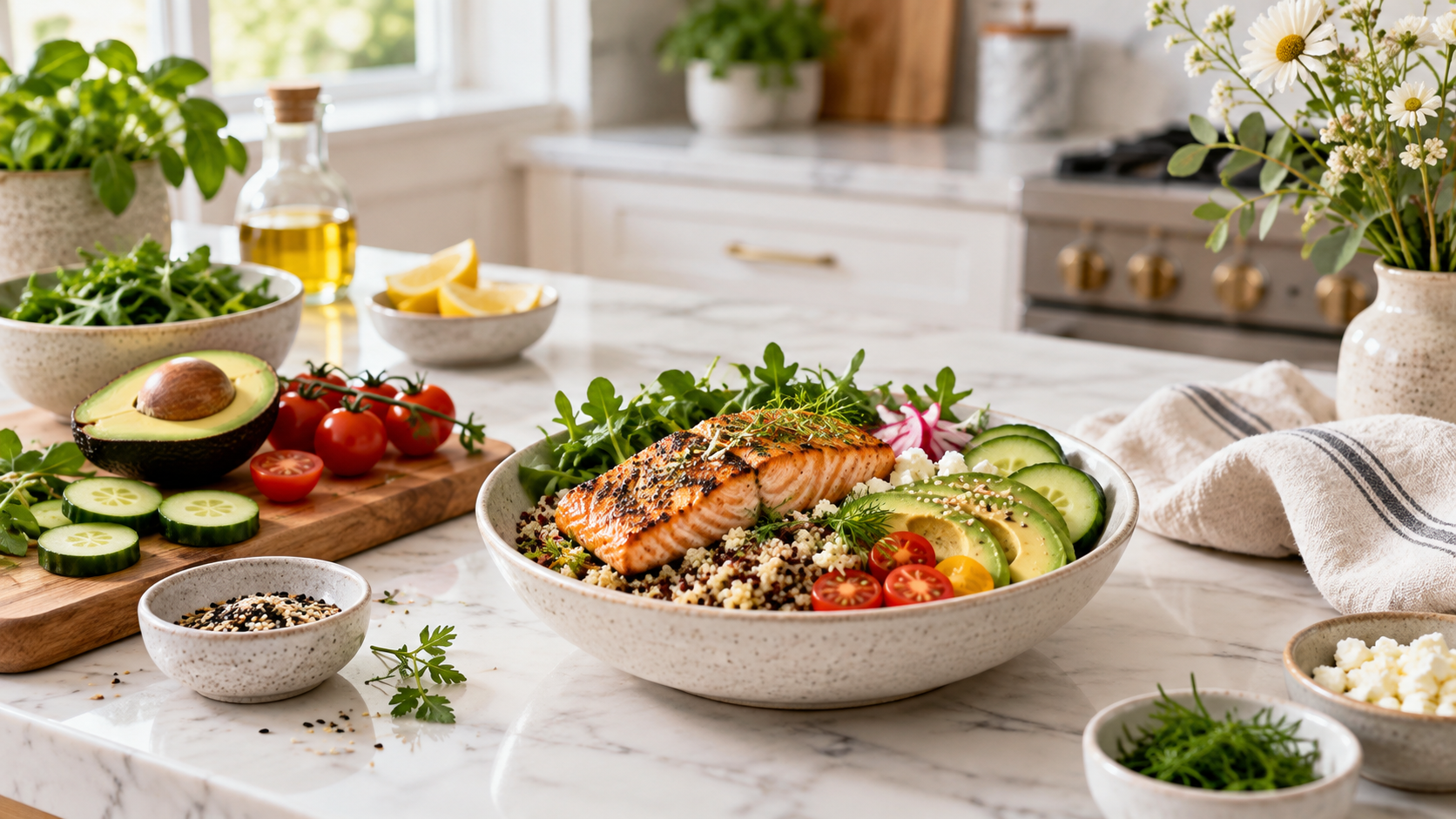
protein + carbohydrate + produce + healthy fat
can take you a long way.
It gives you structure without turning food into a full-time job.
Make room for the foods you enjoy
A plan that requires you to avoid every food you love is probably not going to last.
You should be able to go out to dinner.
You should be able to have dessert.
You should be able to enjoy holidays, birthdays, and vacations without feeling like you ruined everything.
Those things are part of life.
The goal is not to avoid them.
The goal is to know how to return to your usual habits without guilt or panic.
Consistency beats perfection
This is probably one of the most important things I want women to understand.
You do not need to be perfect to make progress.
You need to be consistent enough, often enough, over enough time.
There will be days when things do not go exactly to plan.
There will be meals that are not ideal.
There will be weeks when your schedule is chaos.
That does not mean you failed.
You adjust and keep going.
That is what sustainable nutrition actually looks like.
Good nutrition should eventually feel normal
You should not have to think about food every second of the day.
You should not feel like every meal needs a strategy.
You should not be starting over every Monday.
Eventually, good nutrition should feel pretty normal.
You know how to build a meal.
You understand roughly how much food your body needs.
You know what helps you feel good before and after training.
You can go out to dinner and enjoy it.
You can have a higher-calorie day and move on.
That is a much more useful definition of success than following a restrictive plan perfectly for three weeks.
What I want women to understand
You probably do not need another extreme diet.
You need a better understanding of your own nutrition.
Enough food.
Enough protein.
Carbohydrates to support your training and your life.
Strength training.
A realistic approach to fat loss, if that is your goal.
And a plan flexible enough to work when life is not perfectly organized.
Because if your nutrition only works when everything is going perfectly, it does not actually work.